Posts

Why We Like Nitrox

Image
Nitrox cylinders ready for sidemount diving Image: Rose Bennett Fred Stratton Instructor and Repair Technician fred@bubblesornot.com What is PADI's most popular Specialty Course?  Good guesses would include Deep, Boat, Underwater Videography and Project AWARE. It may surprise you that the  Enriched Air Diver  is number one. Bob Bennett teaching a Sidemout Specialty course using Enriched Air. Image: Rose Bennett In this month's article we'll discuss Enriched Air's progression from commercial and military applications to widespread recreational use, certification, cost, benefits, safety, and equipment considerations. Terminology : All divers know that air is comprised of 21% oxygen (O2) and 79% inert gases (78% nitrogen  and 1% trace elements of helium, neon, argon, etc.).  Any diving gas with > 21% and < 100% pure oxygen is considered enriched air nitrox (nitrogen and oxygen). It is abbreviated EAN or EANx. The number...

Your jacket, ma'am...or do you prefer wings?

Image
Nate Davis, age 10, performing a buoyancy check. Nate is using  a  Dive Rite  TransPac harness and Rec Wings Image: Rose Bennett Fred Stratton Instructor and Repair Technician fred@bubblesornot.com Thank you for the questions we've received since we posted back-to-back articles on buoyancy compensators (BCs) in February and March 2018. L et's look at the myths and misconceptions that triggered the comments and questions and educate ourselves with facts.  "I was told that back inflation BCs force your face forward at the surface, making them dangerous. Is this true?" This is like saying that giving children piggy back rides is dangerous because you'll fall backwards. What happens when they climb on? You adjust your body position to maintain your balance, right? Properly Inflate your BC at the Surface Scubapro XTek back inflation BC Image: Scubapro A BC is not a life preserver. Your BC helps you compensate for...

Wet or Dry Cylinder Fill? Piercing the Myths

Image
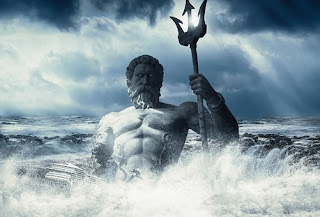
Poseidon, Greek god of the sea Fred Stratton Instructor and Repair Technician fred@bubblesornot.com Several customers have asked us  "Isn't it better to immerse cylinders in water when you fill them?"   The short answer is an unequivocal no .  According to Greek mythology, the god Poseidon is responsible for ocean storms. When displeased, he strikes his mighty trident against the earth, wreaking havoc on the high seas. Of course modern sciences like meterology and oceanography clearly explain tsunamis, storms, and typhoons. Science also explains quite lucidly why filling compressed gas cylinders in a water-filled bin has disadvantages, but you wouldn't know it by surveying the scuba industry and scuba divers. Myths abound about the advantages of submerging cylinders in water before filling them. This article will burst the bubble surrounding wet fill operations and explain what divers should look for in their local dive shop's fill stati...